


Magnetic sensitivity of living system
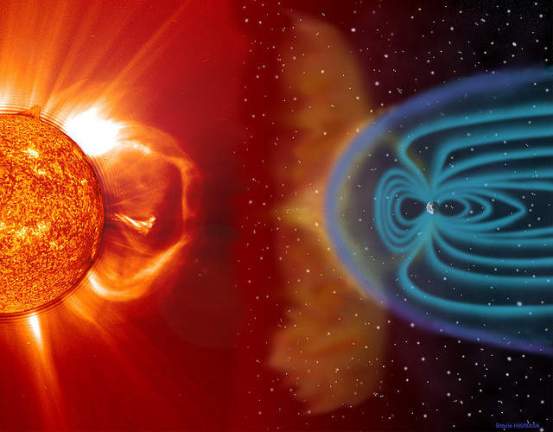 The influence of magnetic storms
In the summer of 1915, while observing sunspot activity, Alexander Leonidovich Chizhevsky (1897–1964) discovered the following: certain periods of increased sunspot activity coincided with the outbreak and intensification of military operations on many fronts of World War I. This event marked the beginning of his long-term systematic research into solar-biospheric connections, which laid the foundations of the science of heliobiology. A year earlier, he had approached Konstantin Tsiolkovsky with the question: "Could solar activity cycles influence the world of plants and humans?" to which Tsiolkovsky replied: "It would be completely incomprehensible if such an influence did not exist. You would have to delve into the statistics of living things and compare the simultaneity of cycles on the Sun and in living things."
Following this conversation, Chizhevsky observed his acquaintances for several months and concluded that some of them experienced increased nervous excitability as the number of sunspots increased. His further research in this area resulted in the work "On the Relationship between the Periodic Activity of the Sun and Crime."
He soon hypothesized the influence of solar activity on disease and mortality. He realized that the development of the organic world is not an independent process, but is the result of the interaction of terrestrial and cosmic factors, of which the latter are the most important. In 1917, Chizhevsky, in his doctoral dissertation on "Physical Factors of the Historical Process," analyzed the most important historical events, beginning with the 5th century BC and ending in 1917. Data on solar activity during this time period was arranged in a chronological sequence based on the historical chronicles of various peoples.
Chizhevsky demonstrated that significant historical events have a clearly defined tendency to recur approximately every 100 years, and within each century, exactly nine periods of peak human activity are clearly visible. Thus, an 11-year cycle of solar activity was discovered, coinciding with the average duration of the cycle of terrestrial events. During these peak years, the Earth was shaken by rebellions, wars, and revolutions. During these periods, popular and spiritual leaders emerged onto the historical stage—Hannibal, Spartacus, Caesar, Attila, Muhammad, Timur, Joan of Arc, Luther, Minin and Pozharsky, Washington, Suvorov, Garibaldi, Lenin, and others. During periods of calm solar activity, people were much more likely to display a peaceful disposition, and their interests and energies were directed toward spiritual activity.
In the 1950s, R. Reiter and K. Werner, after analyzing data from approximately 100,000 car accidents, found that the number of accidents increases with increasing solar activity, especially on the second day after a solar flare. Solar activity affects the behavior of not only humans but also other living organisms. In the 1930s, entomologist Shcherbinsky noted that mass locust migrations recurred at intervals of 11 years. Zoologist C. Elton, after analyzing data on the pelt harvesting of Canadian hares over 100 years, discovered that periods of population peaks for these animals typically coincide with solar cycle minima.
In the early 1960s, scientific publications appeared on the correlation between the incidence of cardiovascular disease and solar activity. They showed that people who had already suffered a heart attack were most susceptible to solar exposure. It was also discovered that their bodies react not to the absolute level of solar activity, but to the rate of change in the Earth's magnetic field, when the Earth's magnetic field begins to shift erratically. This is precisely what magnetic storms are all about! The incidence of myocardial infarction and stroke in the elderly increases sharply. During those same days, telephone exchanges experienced severe communication disruptions, sometimes even completely shutting down. Magnetic storms also caused telephone service disruptions.
The most powerful magnetic storms occur during periods of increasing and decreasing solar activity. The frequency of magnetic storms tends to increase during the equinoxes. In addition to solar activity, the phase of the Moon also influences the strength and direction of magnetic storms on Earth. Gravitational anomalies that occur during such periods have a special effect on the Earth's atmosphere and all living organisms. However, the scientific basis for this relationship remains unclear. It can be hypothesized that the Moon's gravitational influence on the Earth's core alters the flow of free electrons from the planet's center to its surface.
While studying the effects of geocosmic agents on the bodies of polar explorers and pilots, Sergei Aleksandrovich Chernous concluded that approximately 60% of people react to magnetic disturbances, with the heart and visceral nervous system being the most vulnerable. Each person has their own electromagnetic field, as neurons in the nervous system carry electrical charges, and various cells in our body and blood contain metal ions (charged particles). Consequently, all these components are sensitive to external magnetic fields.
Magnetic storms contribute to a decrease in melatonin production. Melatonin is a hormone that regulates the endocrine and immune systems, an antioxidant that influences circadian rhythms, blood pressure regulation, and brain function. Insufficient production of this hormone leads to accumulated cellular damage, which contributes to premature aging and the development of cancer.
A deterioration in the condition of cardiac muscle cells has been observed during magnetic storms. When exposed to electromagnetic waves, the blood becomes thicker and more viscous, the cells are less oxygenated, tissue edema occurs, and the regulation of vascular tone and blood clotting are disrupted. The incidence of myocardial infarctions and strokes has been observed to increase severalfold on days when magnetic storms occur. Electromagnetic pulses in the heart rate range can even cause sudden death.
During a magnetic storm, a person's regulatory systems become imbalanced, which exacerbates existing functional disorders. The body is unable to compensate for the changes imposed by the geomagnetic storm with its biochemical, neurodynamic, and other changes, and it is unable to adapt to rapidly changing conditions.
During periods of increased solar activity, the number of traffic accidents increases, as does aggression and crime. Murders, suicides, miscarriages, and fights are also reliably increased during these periods. Unfortunately, this phenomenon only began to be studied in the 1970s. Mainstream science long denied the connection between solar activity and human health, as it could not explain the mechanism behind this effect. Incidentally, even today, this connection remains significantly understudied.
The incidence of myocardial infarction in relation to the Earth's magnetic field disturbances was studied at the Yerevan Medical Institute. It was found that short-term magnetic disturbances had no effect on the incidence of myocardial infarction. However, long-term magnetic disturbances caused a significant increase in the incidence over the following two days. Of the 3,279 patients who suffered myocardial infarctions between 1974 and 1978, 80.6% were men and 19.4% were women.
On magnetically quiet days, the average daily incidence rate was 1.62 ± 0.038. On magnetically active days, it was 2.43 ± 0.109. Patients over 60 years of age were more sensitive. On moderately active days, the influence of the magnetic field was approximately the same in all age groups. On magnetically quiet days, the incidence rate in men was 0.31 ± 0.033, and in women 0.31 ± 0.016, and on magnetically active days these figures became equal to 1.99 ± 0.095 for men and 0.44 ± 0.04 for women.
There is a similarity between the predominant frequencies of electromagnetic oscillations in the brain and the low-frequency pulsations of the Earth's geomagnetic field. These pulsations range from 0.1 to 100 Hz, but their greatest amplitude is in the 8-16 Hz range, i.e., the alpha rhythm range of the human brain. An increase in the frequency of oscillations of the Earth's magnetic field immediately begins to affect the human nervous system (and to an even greater extent in lower organisms), leading to an increase in compensatory processes designed to reduce the influence of external stimuli. During the peak of magnetic storms, people may experience short-term psychosis, memory lapses, writing errors, quarrels, etc. A. Chizhevsky also noted that during magnetic storms, the condition of patients with skin diseases sharply worsens.
Animals are even more dependent on the Earth's geomagnetic field than humans. Migratory birds, fish, and reptiles are especially vulnerable. During periods of peak solar activity, most rats and rabbits simply die (often from cardiac degeneration) or lose reproductive function (the latter also applies to insects such as locusts). In this case, the sun acts as a regulator of the population sizes of many animals.
The effect of a constant magnetic field on a living organism
A magnetic field primarily affects the circulatory system, the condition of blood vessels, the rate of oxygen transport through the blood to surrounding tissues, and the transport of nutrients through semipermeable cell membranes. A sudden change in the external magnetic field, such as during a magnetic storm, always negatively impacts a person's well-being and health. However, it is possible that chronic magnetic field deficiency also causes cardiovascular and nervous system disorders.
Even short-term exposure to a non-magnetic environment immediately alters the central nervous system's response. Weak magnetic fields influence circadian rhythms and physiological functions, ultimately impacting overall well-being. In natural environments, humans are exposed only to natural electromagnetic fields, to which they have become attuned throughout their evolution on planet Earth. On average, the Earth's magnetic field fluctuates at a frequency of 8 Hz, although this value can fluctuate widely. Our bodies are already tuned to perceive this frequency and consider it a normal, natural background. Our cells are sensitive to this magnetic field frequency.
A low-frequency (2–8 Hz) electromagnetic field affects the human reaction time to an optical signal. A magnetic field in the 5–10 Hz range alters the human brain's reaction time to many other external stimuli. Research has shown that exposure to a short-term alternating magnetic field with a frequency of 0.01–5 Hz dramatically alters the brain's electroencephalogram (EEG). Exposure to weak alternating magnetic fields causes an increased heart rate, headaches, a deterioration in well-being, and a feeling of general weakness. This also leads to significant changes in the brain's electrical activity.
Permanent magnets improve blood circulation, increase energy levels, and oxygen saturation, which stimulates the body's natural vitality and promotes healing. Magnetic therapy is currently used to treat radiculitis, osteochondrosis, and other conditions. Using a permanent magnet belt, I cured my own osteochondrosis in just a few months in 1987. Unfortunately, there is a significant lack of serious scientific research in this area.
Magnetic fields cause charges to form on enzyme and nucleic acid molecules, activate the ribosomes and mitochondria in cells, and alter their magnetic susceptibility. The magnetic energy of macromolecules can exceed the energy of thermal motion, and therefore, even at therapeutic doses, magnetic fields cause orientational and concentration changes in biologically active macromolecules, which affects the kinetics of biochemical reactions and the rate of biophysical processes.
One of the important regulatory mechanisms in living systems is ion activity. It is determined primarily by their hydration and binding to macromolecules. When exposed to magnetic fields, components of systems with different magnetic and electrical properties (ion-water, protein-ion, protein-ion-water) undergo oscillatory changes, the parameters of which may not coincide. This results in the release of some ions from their binding to macromolecules, a decrease in their hydration, and an increase in ionic activity. Increased ionic activity in tissues under the influence of a magnetic field is a prerequisite for stimulating cellular metabolism. A constant magnetic field affects body tissues, causing dia- and paramagnetic effects. In terms of sensitivity of various body systems to magnetic fields, the nervous system ranks first, followed by the endocrine system, sensory organs, cardiovascular system, blood system, muscular system, digestive system, excretory system, respiratory system, and skeletal system.
The effect of a magnetic field on the nervous system alters the body's behavior and conditioned reflex activity. Inhibitory processes are stimulated, which explains the beneficial effects of a constant magnetic field on sleep and emotional stress. The most pronounced central nervous system response is observed in the hypothalamus, followed by the cerebral cortex and the reticular formation of the midbrain. This, to some extent, explains the complex mechanism of the body's response to magnetic field exposure and its dependence on the initial functional state, primarily of the nervous system, and then of other organs.
|
Magnetotherapy is treatment with magnetic fields. |
Magnetic fields increase vascular and epithelial permeability, accelerating the absorption of edema and administered medications. This explains why magnetic therapy is used in the treatment of injuries and wounds. Exposure to a constant magnetic field increases metabolic processes in the bone regeneration area (useful for fractures). Exposure to a moderate constant magnetic field increases bone formation at fracture sites and accelerates the process. Exposure to moderate magnetic fields reduces intravascular mural thrombus formation and lowers blood viscosity. Exposure to low-intensity constant magnetic fields intensifies enzymatic processes and improves the electrical and magnetic properties of blood elements involved in hemocoagulation. Total protein and globulin levels increase in the blood serum, and their concentration in tissues also increases. This also leads to changes in protein structure. Short-term, daily exposure to constant magnetic fields reduces pyruvic and lactic acid levels not only in the blood but also in the liver and muscles. This also leads to an increase in liver glycogen levels. |

|
|
Magnetic fields increase vascular and epithelial permeability, accelerating the absorption of edema and administered medications. This explains why magnetic therapy is used in the treatment of injuries and wounds. Exposure to a constant magnetic field increases metabolic processes in the bone regeneration area (useful for fractures). Exposure to a moderate constant magnetic field increases bone formation at fracture sites and accelerates the process. Exposure to moderate magnetic fields reduces intravascular mural thrombus formation and lowers blood viscosity. Exposure to low-intensity constant magnetic fields intensifies enzymatic processes and improves the electrical and magnetic properties of blood elements involved in hemocoagulation. Total protein and globulin levels increase in the blood serum, and their concentration in tissues also increases. This also leads to changes in protein structure. Short-term, daily exposure to constant magnetic fields reduces pyruvic and lactic acid levels not only in the blood but also in the liver and muscles. This also leads to an increase in liver glycogen levels. |
Under the influence of a magnetic field, tissue Na+ ion levels decrease while K+ ion concentrations increase, indicating changes in cell membrane permeability. Fe+ levels decrease in the brain, heart, blood, liver, muscles, and spleen, while they increase in bone tissue. This Fe+ redistribution is associated with changes in the hematopoietic organs. Cu+ levels increase in the heart muscle, spleen, and testicles, activating the body's adaptive and compensatory processes. Co+ levels decrease in all organs and are redistributed between the blood, individual organs, and tissues. Under the influence of a magnetic field, the biological activity of Mg+ increases. This leads to a reduction in the development of pathological processes in the liver, heart, and muscles.
Exposure to a magnetic field generally does not cause endogenous heat, fever, or skin irritation. It is well tolerated by weakened and elderly patients. Today, people suffer from magnetic field deficiency no less than from vitamin and mineral deficiencies. Forty-nine years ago, Dr. Nakagawa, a professor of medicine, came to a profound conclusion that opened the way to treating a wide range of diseases. He described "human magnetic field deficiency syndrome," which leads to the development of dozens of pathological processes.
The main symptoms of this syndrome include general weakness, increased fatigue, decreased performance, poor sleep, headaches, joint and spinal pain, cardiovascular problems, hypertension and hypotension, digestive disorders, skin changes, prostate problems, gynecological dysfunctions, and a number of other processes. Therefore, restoring normal magnetic presence in human organs and systems leads to the elimination of a crucial part of the pathological process, removing the underlying cause of the disease.
Blood contains, among numerous other components, metal ions, so blood flow in vessels creates a magnetic field around them. Since vessels supply blood to absolutely every part of the body, this means that a magnetic field is present throughout the body. A decrease in the magnetic field in the environment disrupts the magnetic field in the circulatory system, resulting in circulatory problems and disrupted transport of oxygen, carbon dioxide, and nutrients to organs and tissues, leading to the development of disease. A magnetic field deficiency can be as damaging as a vitamin or mineral deficiency.
Many have probably wondered about the nature of geopathogenic zones. Even within a single home, there are places more favorable for sleep and less favorable, places where a person can't fall asleep for long periods of time, where they are haunted by nightmares. I have no doubt that this is due to the intensity and stability of the magnetic flux, linked to the flow of electrons emanating from the depths of the Earth, or, conversely, directed inward. We shouldn't dismiss these factors.
The conditions on a submarine and a spacecraft can be compared to those shielded from a geomagnetic field. People underwater also exhibited significant functional impairments, despite their favorable living conditions. They lacked the Earth's magnetic field, which was unable to penetrate the metal walls of the submarine's compartments. A decrease in basal metabolic rate, a decrease in the total white blood cell count in the peripheral blood, and suppression of digestive and diuretic leukocytosis were observed. Furthermore, the crew experienced disruptions in the daily cycles of various functions, and symptoms of various illnesses, particularly stomach problems, appeared. Cosmonauts also exhibited abnormalities compared to their condition on Earth. Shifts in metabolic reactions, particularly calcium metabolism, were noted. A decrease in red blood cell count, altered circadian rhythms, and sleep disturbances were also observed. During space exploration, magnetic field problems become very serious.
On the influence of magnetic fields on humans. Nikolai Levashov
Are impulses, radiation, and the influence of magnetic fields harmful to humans? Nikolai Levashov
How Electromagnetic Fields Damage Your Health — Interview with Dr. Paul Heroux