


The PCR test imposed on the world by WHO is not capable of detecting infection!
 Review report Corman-Drosten et al. Eurosurveillance 2020
This extensive review report has been officially submitted to Eurosurveillance editorial board on 27th November 2020 via their submission-portal, enclosed to this review report is a retraction request letter, signed by all the main & co-authors. First and last listed names are the first and second main authors. All names in between are co-authors.
External peer review of the RTPCR test to detect SARS-CoV-2 reveals 10 major scientific flaws at the molecular and methodological level: consequences for false positive results.
Pieter Borger(1), Bobby Rajesh Malhotra(2) , Michael Yeadon(3) , Clare Craig(4), Kevin McKernan(5) , Klaus Steger(6) , Paul McSheehy(7) , Lidiya Angelova(8), Fabio Franchi(9), Thomas Binder(10), Henrik Ullrich(11) , Makoto Ohashi(12), Stefano Scoglio(13), Marjolein Doesburg-van Kleffens(14), Dorothea Gilbert(15), Rainer Klement(16), Ruth Schruefer(17), Berber W. Pieksma(18), Jan Bonte(19), Bruno H. Dalle Carbonare(20), Kevin P. Corbett(21), Ulrike Kämmerer(22)
 English speakers know that their language is odd. So do people saddled with learning it non-natively. The oddity that we all perceive most readily is its spelling, which is indeed a nightmare. In countries where English isn’t spoken, there is no such thing as a ‘spelling bee’ competition. For a normal language, spelling at least pretends a basic correspondence to the way people pronounce the words. But English is not normal.
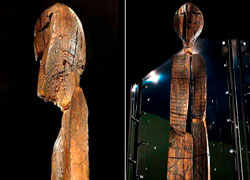 New findings about the 12,500-year-old Shigir Idol have major implications for the study of prehistory
 Untested GMO Vaccination in ‘Human Laboratory’ Trial
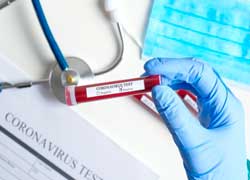 The RT-PCR "Test Detects Virus Particles, Not the Whole Virus"
 Toen ik met plezier de nederlandse taal ging bestuderen, was ik geschokt dat de nederlandse en de russiesche taal de zelfde kern hebben en dat nederlanders honderden jaren geleden, de zelfede taal spraken als wij, Slaven.
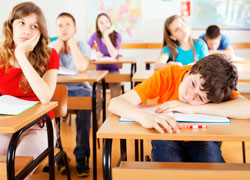 Why are our children so bored at school, cannot wait, get easily frustrated and have no real friends?
 For years, normality has been stretched nearly to its breaking point, a rope pulled tighter and tighter, waiting for a nip of the black swan’s beak to snap it in two. Now that the rope has snapped, do we tie its ends back together, or shall we undo its dangling braids still further, to see what we might weave from them?